Nowadays it’s easy to navigate around because of the number of apps and gadgets that facilitate our everyday life.
In the past, people needed to find ways of marking trails, especially when they were forced to go through thick forests.
Now if you wonder how people were able to determine the right direction without maps or GPS, here’s the answer.
Native Americans did this by bending trees. So how did they do it? By inserting a piece of the tree into a hole and allowing the tree to grow around it.
There are of course trees that have irregular shape as a result of Mother Nature. So how did the indigenous people know which trees are man made and which are bent by nature?
The ones Native Americans bent have a distinguished looks; a noticeable nose, or notch that sticks out at the end of the bend as shown in the photo below.
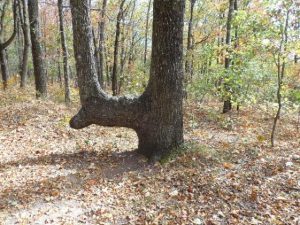
Other details that can help you determine which trees were modified by men are the scars from where the straps were placed when the trees were young.
Most of these trees are over 150 and even 200 years old.
As stated in the national American Forests website:
“Across the U.S., you can find trees that are oddly shaped. Their trunks have odd kinks in them, or bend at strange angles. While some of them may indeed be simple quirks of nature, most of these trees are actually landmarks that helped guide indigenous people on their way. Native Americans would bend young trees to create permanent trail markers, designating safe paths through rough country and pointing travelers toward water, food or other important landmarks. Over the years, the trees have grown, keeping their original shape, but with their purpose all but forgotten as modern life sprang up around them. Today, we may not need these “trail trees” to navigate, but their place in history makes them invaluable. Imagine the stories these trees could tell.”
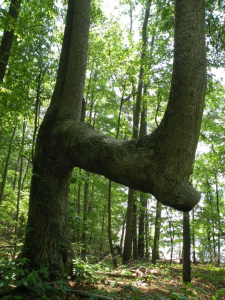
In order for these trees to be preserved, the Mountain Stewards website was created. The site mapped out more than 1,000 bent trees all over the country and documented exactly where they were!
For more on this interesting history fact and the bent tress across America go to the video below.
Please SHARE this article with your family and friends on Facebook.