One of the best things about nature is that it’s always changing. Each season brings its distinctive colors, and with that comes joy and feelings of excitement. From pinkish blossoms to yellow leaves, nature is breathtaking all-year-round.
However, there are trees out there whose trunks are white, and that’s not because of the seasons, but because people paint them, and now you’ll learn why.
One of the reasons is because the white color protects the bark from sunscald, which is basically the plant version of sunburns, a condition that causes damage to the cambium layers and leads to dehydration. The white color acts like sunblock and prevents cracking.
In case the bark splits, it becomes more vulnerable to insects, fungus, and other diseases.
This painting is usually done during the winter when fluctuating temperatures from chilly nights to sunny days can damage the bark.
“This type of painting is typically done on thin-barked residential trees or orchards,” says Christopher Evans, extension forestry and research specialist at the University of Illinois Urbana-Champaign. “Painting the trunks white is said to moderate the daytime heating of the bark and lessen the chances of sunscald injury.”
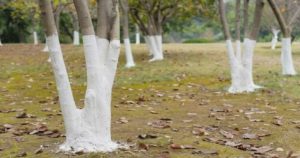
If damaged from sudden thaws and freezes, trees, especially those bearing fruit, are left in a vulnerable state. In cases of severe injury, the damage can be fatal and by applying heavy latex paint (or a specially designed formula) to a tree trunk can help protect trees from harsh winter weather.
Other reasons are that painter tree trunks are more visible, especially when they are planted near the road. This may prevent any accidents as drivers are aware there are trees out there.
“Basically, it marks the tree in an inconspicuous way,” Ken Fisher, assistant forester for the Boulder Parks and Recreation Department, said. “A lot of people don’t even notice it, but it alerts our contractor that this is the tree we’re talking about. We’ve been using paint dots for 25 years or so now, so some trees have several paint dots on them.”
Forest trees also get paint to indicate which of them is hazardous or safe, or simply mark private property.
“In some places, trees with nests of rare or endangered species are marked,” Evans says. “That is the case with the federally endangered red-cockaded woodpecker in the Southern United States. Their tree nests are generally marked with a white paint ring.
“Basically, there aren’t any hard and fast standardizations for the use of marking paint in forestry.
“That can lead to confusion when trying to generalize the meaning of different symbols and colors.”
For example, an X often means the tree should be cut, and numbers show a tally before a harvest.
This is how to paint the trees properly.
Never use an oil-based paint, which will not allow the tree to respirate. It’s best to use water-based latex paint diluted to the ratio of one-gallon latex with four or five quarts of water. Look for paint with an organic base to avoid additives that could damage the plants.
You can apply the color using a paintbrush. If you don’t like to use white color, choose what suits you best, but avoid dark shades.
It’s enough to paint the trunks only once, but in case you reside in an area with extreme weather conditions, you may reaplly paint once a year.
Please SHARE this article with your family and friends on Facebook.