One of the first thoughts that comes to mind when we think about the past is how people lived before electricity. We can’t picture a day without it nowadays because all of our equipment and electronics are powered by energy.
The truth is that most houses don’t have enough power outlets to keep everything running and charged, so most of us rely on power strips without realizing that plugging appliances that use a lot of electricity into a power strip turns them into dangerous fire hazards.
Although power strips are ideal for charging your phone or powering an entertainment setup, there are several items that should never be put into one.
Air conditioners, space heaters, toasters, and other high-wattage appliances can easily cause power strips to overheat, posing a fire threat.
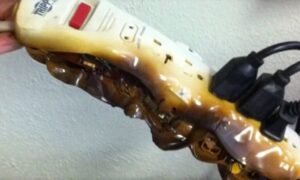
Even before plugging anything into a power strip, evaluate how much power it can handle. This is frequently stated on the product.
To function, high-capacity appliances require a large amount of electricity to be drawn through an electrical circuit. Keep in mind that an appliance does not have to be enormous in order to consume a lot of power.
Below is the list of appliances that should never be plugged into a power strip.
1. The oven: Even though the oven is not used continually, it is a power-hungry appliance that should not be plugged into a power strip. In fact, it should be plugged into its own wall outlet on its own circuit.
2. Refrigerator: Refrigerators require a lot of power and frequently cycle on and off which can easily overload a power strip and cause damage. Much like the oven, refrigerators require a wall outlet dedicated solely to powering the appliance.
3. Washing Machine: When turned on, washing machines pull a lot of power. This is the main reason why these appliances shouldn’t share a receptacle with any other appliance or device.
Most washing machines use a max of up to 1400 watts, putting it dangerously close to the max load of most power strips. On top of that while working, washing machines are usually left unattended and work longer hours, at least an hour, which is long enough for a power strip to overheat.
4. Heating: Portable heaters should never be plugged into a power strip because most of them use 1,500 watts of energy on their high setting and they usually run for extended periods of time.
5. Microwave: Since they consume a lot of energy when used, most microwave ovens are plugged into their own receptacle and that is always a good practice.
6. Coffee Maker: Those who own a coffee maker are not fully aware of the power these appliances use, and this is why they should never be plugged into any sort of power strip or extension cord.
7. Toaster: You may think that browning up slices of bread or bagels doesn’t require a lot of energy, but the truth is that toasters use a lot of energy when in use and they should be plugged directly into the receptacle rather than a power strip.
8. Another Power Strip: Power strips are not meant to be used in conjunction with another power strip, although many people do exactly that. This, however, violates most safety codes because it can easily lead to overloading the electrical system.
9. Electronics (Computer, TV, Router): These types of electronic devices don’t necessarily use a lot of power on their own, but they are sensitive to surges and you can find yourself with a burnt out computer or TV very quickly if you plug them into a power strip.
If you want to protect these sensitive devices from power surges, opt for a power strip that functions as a surge protector.
Please SHARE this article with your family and friends on Facebook.