It’s like that charming house in Pixar’s Up, stubbornly standing its ground amid a sea of development.
These unique homes, originally named in China, are now a global phenomenon, known for their owners’ steadfast refusal to sell to developers.
Take the Zammit family in Sydney, for instance.
Their property, nestled in the Ponds, a mere 30-minute drive from Sydney’s bustling CBD, is a testament to their determination.
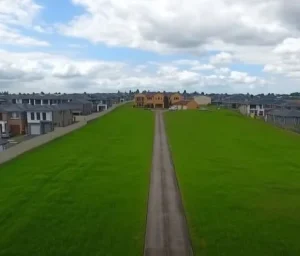
Once a quaint area dotted with cottages and farms, each home here had its own character.
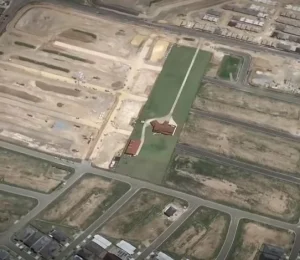
But as time passed, the neighborhood transformed, with most neighbors giving in to developers, replacing uniqueness with uniformity.
Diane Zammit, the matriarch, nostalgically recalls the area’s past.
“It used to be farmland dotted with little red brick homes and cottages,” she told Daily Mail Australia. “Every home was unique and there was so much space – but not any more. It’s just not the same.”
Despite the changes, the Zammits’ home, resembling a castle on their vast property, remains a symbol of their resistance.
Their land is no ordinary plot.
It’s a sprawling estate with a lush lawn and a 200-meter driveway leading to a brick home with a triple garage.
The property’s value? A whopping $50 million. But to the Zammits, it’s more than just a price tag.
If they ever decided to sell, the land could be transformed dramatically.
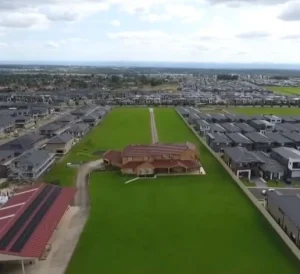
“Depending on how far you push the development plan, you’d be able to push anywhere from 40 to 50 properties on something like this, and when subdivided, a 300 square metre block would get a million dollars,” explains Ray White Quakers Hill agent Taylor Bredin.
Yet, the family’s resolve remains unshaken.
The Zammits’ story isn’t unique. Similar tales of nail houses have surfaced over the years.
One notable example is the 108-year-old farmhouse in Seattle, Washington, owned by Edith Macefield.
She refused to sell her home and unexpectedly befriended the construction chief, Barry Martin, who later became her heir.
Macefield’s house, still standing, is a real-life mirror of the beloved Pixar movie home.
It’s a poignant reminder of the emotional value that some homeowners place on their properties, far exceeding any monetary offer.
So, what would you do in a situation like this?
Would you hold onto your cherished home, steeped in memories and history, or yield to the lure of a lucrative offer?
To see the Zammit family’s impressive property, a lone holdout amidst a sea of new developments, check out the video.
It’s a striking example of personal values clashing with commercial interests, a story that continues to resonate with many.